Saturday, 29 November 2014

Letters from MP & DfT about cycling

I wrote to my MP around the time of the last cycling debate in October, and received a reply thta he had contacted the DfT & Robert Goodwin on my behalf.

He has now replied back a second time, enclosing a reply from Mr Goodwin.
What's interesting is Stephen Hepburn's (Labour) comments about Labour prioritising cycling in three key areas. Infrastructure, safety and training.


Saturday, 15 November 2014

Winter cleaning tips

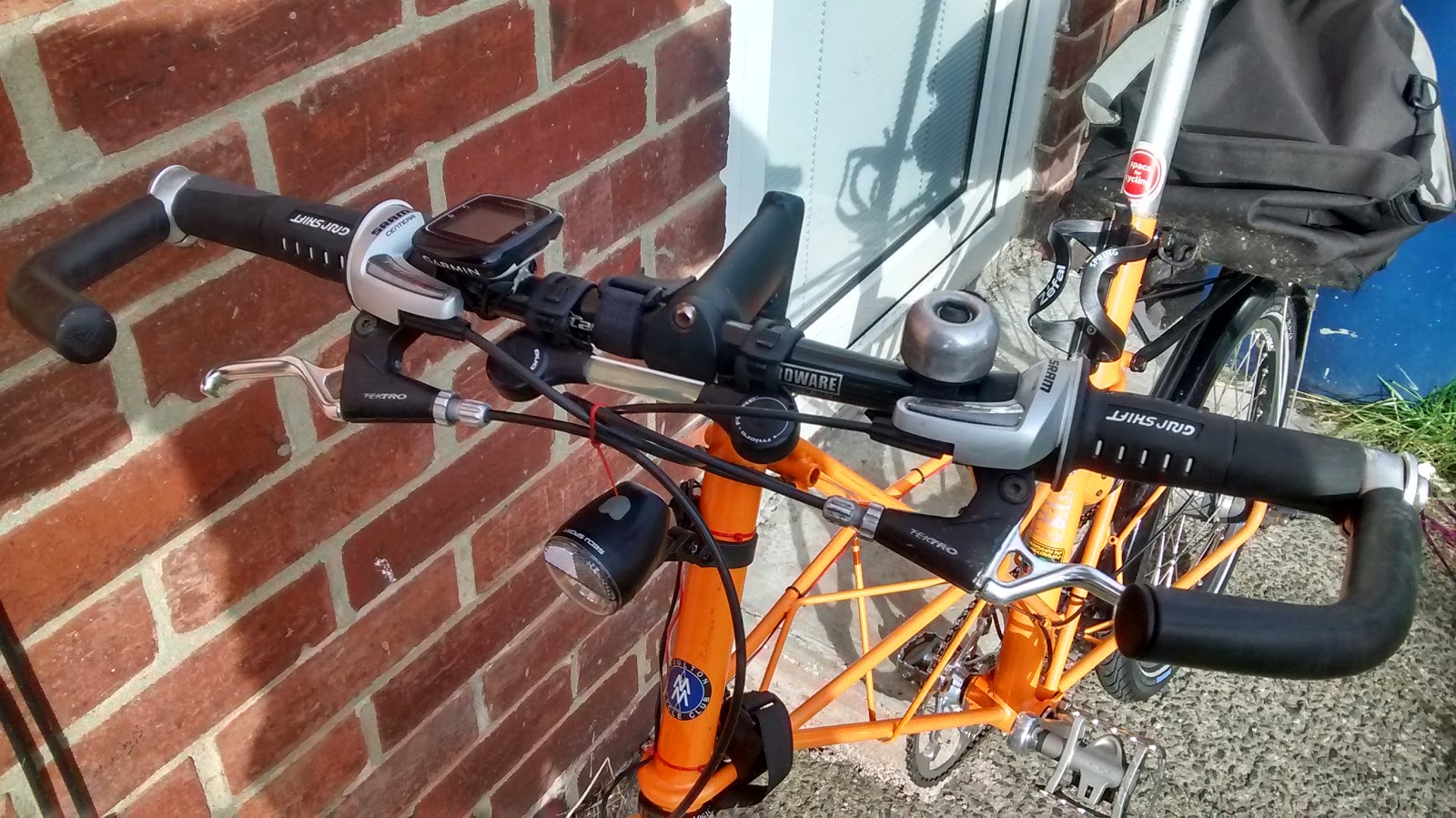
At this time of year even a single trip out on the bike can leave it looking like mine below. That was after a weeks commuting, so you are going to want to clean it.


Regular quick washing and some very quick maintenance will make any bike run better and help spot  issues more quickly.

Don't use washing up liquid as it contains powerful salts etc which whilst cleaning the muck of the bike will steadily strip the protection from the paint. Don't bother with the overpriced specialist bike cleaners either.

Do use a decent quality car shampoo will do fine & is a lot cheaper.

Don't use a jet wash or high power hose & just blast the muck off as you will also wash any lube or grease out of bearings.

Do use a nice car wash brush with long soft bristles. Cloths  and sponges are good too, but I find a brush is quicker & easier and long bristles can get to some of the nooks better.


  1. Don't be afraid to use plenty of hot water
  2. Start from the front of the bike at the handlebars, and work down the front of the bike and the left hand front forks. Ensure you get the inside edge of the fork, and clean the brakes.
  3. Clean the front mudguard (if fitted)
  4. Wash the front wheel and tyre including tread & sidewalls, giving the forks a good wash with the brush.
  5. Work back along the frame cleaning the left side & always working from the top down. I.e Top tube, then seat tube, then downtube ending up at the bottom bracket.
  6. Clean the left crank and pedal. Using a brush with long soft bristles lets you get into the nooks where you couldn't get fingers and cloths.
  7. Clean down the left hand seat stay, and brakes. Also wash any rack and mudguards that may be fitted.
  8. Clean the lefthand chain stay, making sure you get underneath and behind the bottom bracket.
  9. Wash the left hand side of the rear wheel and tyre, including the tread and sidewalls, and spokes.
  10. Repeat the process on the right hand side of the bike, ensuring that you wash the rear of the chainset.
  11. A long bristled brush will let you clean the freewheel cassette, and also the gear mechs thoroughly.

Once cleaned, let the bike dry for a short while if possible then

  • Check all the brake and gear cables for any fraying, or cracks or kinks in the outer cables 
  • Squeeze the brakes and ensure that they release fully and are not sticking.
  • Ensure that brakes are well adjusted and take up any slack. Brake blocks wear like soap in the winter and may need adjusting or even replacing more often than in the summer.
  • Lubricate the chain with a good quality "wet lube". "Wet lubes" are designed to be more resistant to being washed off by rain etc. 
  • Don't use GT85 on a chain in the winter, or even worse WD40 (which will strip lubricant from the chain). You don't need to put loads on. Just a drop on a number of links and spin the pedals backwards to spread the lube thinly and evenly. Any more will just make you and the bike oily and mucky.
  • Cover the rear wheel behind and below the rear mech with newspaper or similar and put a few squirts of GT85 or similar teflon lube on the mech hinges, and also into the centre of the jockey wheels.
  • Do similar for the front mech (if you have one).

Then go ride it and get it mucky again


Saturday, 1 November 2014

11 Winter cycling tips for the dark

1 - Always have good working lights

Having good reliable lights in the winter season is a no brainer if there is even a possibility of riding in the dark. It's also the law. You can pick up a set of lights for just a few quid. I would avoid the pound  shop specials. But Bell lights from Asda are OK,and can be picked up with the shopping. It's worth checking the local Aldi as the set they do as a cycling special in September can sometimes still be found instore.

 2 - Carry spare lights or batteries

If you are using battery lights, then always carry a backup set or a spare set of batteries. It is worth running 2 lights on the rear in case the batteries die in one.

3 - Invest in a dynamo system

For regular or long distances in the dark, then the best solution is a dynamo, either fitted into a hub or running of a tyre sidewall.

Modern dynamos are much better than the horrid things you used to buy from Halfords which felt like the brakes were on.

Hub dynamos can cost the earth, but Shimano make some extremely competitively priced ones which you can purchase for as little as £30 or so, and they are fit and forget. They never slip and are very low drag so can be left permanently on for short gloomy autumn and winter days

Sidewall dynamos which run off a tyre sidewall are also good,especially if you use tyres like Schwalbe Marathons which have dynamo tracks moulded in. The AXA HR has been around for years and is well regarded as are Nordlicht. If the bike has cantilever/Vee brake mounts, then mounts are available which bolts onto them for dynamos and lights.

As dynamo lights are almost the norm on the continent, then for the best choice and prices, I'd recommend buying from a reputable continental internet store such as Dutch Bike Bits or Rose bikes. You can also buy them ready built into wheels. Ebay is also a good source,but can be riskier. I bought a full wheel from the 'bay for £30, and the whole setup including front and rear lights for under £60.

The same stores also sell  the front and rear lights. This site has very good comparisons of a lot of front and rear lights.

Whilst on the subject of lights, cheap hi-power LEDs which are basically torches chucking out raw white light are bad for seeing by as they just chuck light everywhere and not where and not in a pool in front of you. These are also poor for oncoming people as they can dazzle. Look for lights which have been approved by organisation such as StVZO

4 - Use Reflectives, and ditch the hivis & flouro colours

Hivis clothing uses UV light to make them seem brighter & stand out. in the dark and on gloomy days, the UV light is either not there or is much reduced & this makes hivis no better than normal clothes. Also street lights tend to wash the colour out, so just pulling on the hivis for the quick trip to the shops does not make you visible.

Instead, look for gear with lots of reflective bits. These reflect (obviously) headlights etc back and in traffic will make you more visible. Reflective patches on legs can help as the movement catches the eye (if the person is looking). if making turns, reflective bands on arms can help as well.
These are in addition to and do NOT substitute for lights though.

5 - Wear layers of clothing

Weaing layers of thin clothing in winter is better than one or two thick layers. Several thin layers trap air between the layers, which also helps insulate against the cold. If you do get too hot, then it is easy just to remove a layer rather than be uncomfortable.

6 - Wear a peaked cap or helmet

 Wearing a cap or a helmet with a peak,keeping it low over the eyes means a very slight dip of the head can help to minimise glare from street lights & headlights.

7 - Wear glasses 

Winter can often have wet & dirty roads even if it's not been raining. Glasses (plain if poss) guard against grit & road muck getting in the eyes.

8 - Know your route, and options

Whilst winter night rides on new roads can be exciting, for regular trips, knowing and being used to the roads on the route will help. Knowing what's around the next corner or where the potholes are is helpful and reassuring.  Knowing alternative routes to avoid busy traffic hotspots, or places where the road floods after rain can also be very valuable.

9 - Use bombproof tyres to keep moving

The last thing anyone needs is a puncture & flat tyre on a dark cold winter's evening. If you haven't, then invest in some top notch tyres such as Schwalbe Marathon Plus as these will almost eliminate the risk. Self sealing inner tubes can also help reduce the risk of a puncture. Keep tyres inflated to the max pressure as well, although if your route has lots of leaf fall etc or it's slightly frosty then dropping the pressures slightly can give a little more grip. If you only carry a small minipump, then if you can, keeping a cheap track pump at work can be a great idea to pop the tyres back up to pressure if you have had an issue on the commute.

10 - Regular maintenance prevents breakdowns

Even if your winter ride is just for the winter, keeping it clean and lubricated will make the ride much more pleasant and easier as well as making the bike and components last longer.
A quick weekly wash down and check doesn't take long and can help spot issues before they cause a breakdown mid commute.
Heavy rain can wash a chain of lube in one ride. If possible keeping a small bottle of lube at work is a great tip for such emergencies

11 - Just do it

Just get out there and ride.


Sunday, 19 October 2014

Bike Hack! - Repurpose inner tubes as bar end covers

Lots of people riding flat bars have bar ends, which are usually either just painted or anodised alloy.
This can be cold and slippery in wet conditions and the winter.


Although bar end covers are available from many suppliers, this is about re-purposing sections of old inner tubes from a road bike to make a DIY hack. Why? cos it's cheaper (although covers aren't expensive) and about reusing materials that would otherwise just be thrown in the bin.


  1. Cut a length of tube, and slide it onto the bar end after removing the end cap.
  2. Spray hairspray on the bar end and inside the tube to enable it to slide on easier. It will dry firmly after a while.
  3. Cut the inner tube so a few centimeters is left over the bar end, and then tuck it inside the end.
  4. Firmly push the end cap back in


Repeat for the other side, and once completed, you will have a pair of ends that look like the photo below. A very neat looking finish

NHS & combatting the obesity crisis with active travel

There is an interview published on the Guardian website today with the Chief Executive of NHS England

He states that the NHS needs to lead from the front on the battle against obesity, and one of his suggestions is for gym membership & slimming clubs as options for those that want to take it up.
These options are all very well for the people with the time or the inclination to spend evenings at gyms etc. and should not be discarded. For may though it's too much time & after a long hard day at work it can be too much.

What the NHS  needs to do, which could be much more effective is to really encourage people to walk and cycle to work and whilst at work. This needs to be as big & as obvious a push as the campaigns to stop smoking, and to encourage take up of the flu jabs. Below is one campaign my Trust ran against smoking, photobombed for cycling!


Building exercise into the daily routine by replacing sedentary activities such as driving is an excellent way as people don't need to find extra time & it can save money in car running costs and fuel as well. A win win all round.

What could NHs Trusts do?

  • Keep cycle2work schemes open all year around. My scheme opened for only 2 months, but I can lease a car on salary sacrifice to save tax on that purchase all year round. 
  • Trusts should offer incentives to get people to change habits. Car use is often a habit that can be broken. Commuter challenges with prizes for the most journeys to replace cars & calories burnt etc. This month long challenge ran across Sunderland in September is an excellent example. 
  • Create prominent information pages & signage on workplace facilities such as changing space and secure cycle parking. I know when I started cycling to work, such information was hard to find.
  • Generate & publicise maps of safe(r) cycling routes to sites, and between sites along with timings. Travelling between sites can be quicker by car, but the time spent parking in busy car parks makes driving longer. A lot of routes do exist but people in cars do not see the possible alternatives. These routes could have timing as well as distance so people can see how quick journeys can be.
  • Encourage commuters with buddy schemes and user groups, so people can cycle together and encourage & help each other.
  • Have pools of loan bicycles and e-bikes to encourage people to swap from cars either for commuting or for inter-site travel. They could even include cargo bikes for larger loads
The biggest thing to get people riding to work is infrastructure. It should be noted that several large NHs organisations in London have expressed strong support for the proposed new segregated cycleways. NHS organisations are in a strong place to lobby local authorities to provide better & safer infra to and from NHS sites, both for staff and visitors.

Tuesday, 9 September 2014

Bollocks infra - with still wet paint & tarmac

Durham County Council have been busy for the last few months converting what was a fairly unexciting roundabout at the north end of Chester Le Street shown below on Google Maps


They have changed the layout to accommodate more lanes and signals at the roundabout.
The project page is here along with links to the plan, and the consultation report.

The consultation report does mention access to properties, but nowhere does it mention any consultation with groups or organisations representing the cycling community. This is surprising, not least because it is the route of the Sustrans NCN 725. I am presuming the give way markings are appeasements to locals.

Durham County Council replied to a tweet about the markings to Tim Beasley stating

They have removed grass verges and squeezed footpath space to make the extra room for vehicles and in the process created some fairly tortuous and frankly extremely poor space and routes for both pedestrians and cyclists resulting in plenty of potential for conflict.

The southbound route has been largely completed with the exception of signal installation, and the full horror has been revealed.

A167 north of the junction is now a massive 5 lane beast of a road as you can see from the photo below

Southbound approach from the A167. The have removed a section of the southbound painted label as part of the lane widening before meeting the off-road section which is segregated. Notice the give way markers for each private house driveway 

A closer look at the markings giving driveways priority over people cycling. Why? just why?

Here you can see a traffic light signal smack in the middle of the segregated cycle lane. You can also see just how much space has been given over to motor traffic compared to people walking and cycling
This is the shared path around the corner at what will be a signaled crossing across the A693 Blind lane.
That's a Moulton which is about 1.3m tyre to tyre. I estimate the width of the path at about 1,5M wall to kerb, but of course the signal pole reduces that considerably. It is also quite a tight turn for bicycles,

Looking across Blind lane from the traffic island, you can see that for some reason the path humps up with a high stepped kerb. This is on a corner so not a bus stop. Given the posts and the corner I could foresee this being a conflict point with potential for a serious fall if you come off the kerb.
This is a view of the above kerb from the path. Not very person friendly at all.


This is a view showing the exit to the A167 Park road South and on the right the new slip towards Chester Le Street town centre. The large island on the right has shared paths crossing it which are also shown below, which again will be signalised

There is a smaller island as well with more shared paths crossing it, these are not signalised though. This is the north-south route most cyclists will need to follow, unless the want to mix it on the now 3 lane carriageways . Once over both lanes, the southbound route picks up the existing off road path which continues south for a few hundred metres before changing into a painted lane.
Still some work to do northbound, but it still gives priority to private drives over cyclists. Also the cycleway has give way markings where it joins the road just before a bus stop (increasing risk of conflict). Previously there was a painted lane which has disappeared in favoure for 2 exit lanes, and now starts a few hundred metres further up. Could they not have linked up?


Thursday, 31 July 2014

Washington to South Tyneside - Recent Developments

Been toying with putting this post together for a while, and KatsDekker from Newcycling spurred me into action.

Below are a few photos showing the highlights of the cycling facilities between along Pattinson Road in Washington and upto the A1290/A19 junction at Downhill Lane in South Tyneside, which makes up a few miles of my daily cycle commute. Whilst not completed and even end to end, the facilities makes the journey doable. Without it the route on roads would be so risky and nerve wracking that I would chuck in the towel.

The photos were taken SW to NE.


This is the start/end of the shared path along Pattinson way West from here, you need to mix it on an uphill drag for 1/2 mile on a busy rough road with cars, vans and LGVs. Quite unpleasant at peak times.


Washington has floating bus stops too. Just past the stop on the right is a Sainsbury's store with cycle parking stands right on the route which is handy for picking up essentials.

For a distance the C2C route runs along the shared path.As a scenic leisure route it is fine, but as a transport route along this stretch it is twisty, convoluted and has some badly surfaced sections, unlike the shared path, which is actually has a better surface than the road 


One of the typical crossing points on the shared path along Pattinson Way. In the distance is the roundabout at the junction with Barmston lane. If you are heading straight on, you need to mix with traffic across the A1231 junction. An very quiet alternative is to head right along Barmston lane, and then left around the back of the Asda depot.


Once round, there is a quiet bridge over the A1231, again you kiss the C2C route here, which heads off to Sunderland along the narrow path to the right of the photo by the bollard.


Once over the bridge, you can either keep left along the single track lane, or use this short 25m stretch of permissive path to join the new road leading from Turbine business park to the traffic lights 2 photos down.


If coming in the other direction and wanting to use the single track lane, then look for the narrow tree lined entrance marked by No Through road signs.


This is taken from the same position as the above photo. The Turbine park road joins up at the traffic lights. The path up Cherry Blossom way & to Nissan starts on the left at the lights, hop on to the path even though the shared path signs have not been installed yet.


Once around the junction, you can easily see the widened path, and the concrete blocks designed to stop LGVs from parking on the pavement. Most of the time this stretch of road is a linear truck park with inter-continental lorries parked nose to tail along the full length.


Cherry Blossom way swings east at this roundabout with gates to one of the Nissan pounds for new vehicles. There is a typical crossing here, where the shared path switches sides for the rest of the run up to the A1290.


Just before the A1290 (that's it in the distance at the roadworks) the wide shared path terminates at the Unipress factory entrance. The now narrow path continues up to the A1290 and around to the right.  


The photo above shows the narrow path, and where the newly widened path along the South side of the A1290 ends. I understand this is to be continued as a future phase around to Unipress. 
The shared path is unfinished and is still waiting for it's top dressing, and as you can see below is a bit rough. Still preferable to the seriously deadly A1290 for all but the most hardened road warrior though, and quite well used already.


Once past Nissan, head along the old Washington road past the Transport museum, and over the A19 pedestrian/cyclist bridge to Washington Road on the edge of Hylton. 
There are various works ongoing (July 14) heading east, but if you are heading north, there is another widened shared path which runs to the junction with the A1290  

Currently when you get to the A1290, you are confronted with this crap junction,which is being rebuilt currently. If heading North,you need to cross the junction into Downhill lane, and then jump onto the footpath to join the cycleway heading north. There's no dropped kerb to get from the road to the cycleway. It will be interesting to see what a mess South Tyneside Council make of the cycling provision